News information
|
|
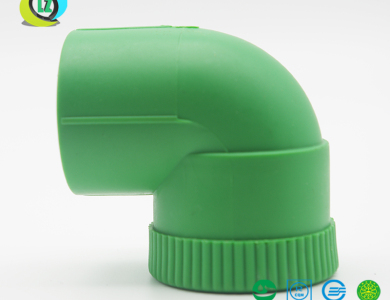
Teach you the identification method of PP-R pipeline1. Product appearance The national standard specifies clear requirements for the appearance of PP-R pipes and fittings, mainly including that the product color should be uniform and consistent, without any impurities; The inner and outer surfaces of the product should be smooth and flat, without defects such as bubbles, obvious depressions, grooves, and impurities. 2 Product Identification The pipes produced by legitimate manufacturers have the company's trademark and name, product name (PP-R), product pipe series (S), nominal outer diameter and wall thickness, production date or batch number, national standard number (GB/T 18742.2-2002), and some legitimate manufacturers even indicate the production time, contact phone number, and other information. Such products can actually be used with confidence, and the pipe fittings will also have the above markings. 3 Welding identification The normal welding temperature for PP-R pipeline welding is within the range of 260-290 ℃. Within this temperature range, the welding quality will be better guaranteed. If the product can easily enter the welding die under normal welding parameters and the welding deposit is close to liquid, it indicates that the product is not authentic If the product is produced from PP-R raw materials and can quickly cool and harden (usually within 10 seconds), it can also indicate that the product is not produced from authentic PP-R raw materials. This is because one of the characteristics of PP-R is that it has good insulation effect, and its cooling speed will naturally be slower. 4 Experimental testing When we cannot distinguish the quality of the product using the above methods, we can only use testing instruments for testing to effectively distinguish the quality of the product. Several important test requirements data are specified in the national standards, such as the pipe aging resistance test (a test that maintains 8760 hours without failure under an environmental stress of 1.9MPa and a test temperature of 110 ℃), the pipeline system stability test (5000 cold and hot cycles), and the impact resistance test. Therefore, users can request the manufacturer or merchant to provide the above test reports for verification when selecting. Additionally, it should be noted that national standards also have an important requirement for the melt index of raw materials used in pipes and fittings. The national standard requires that the change in melt index before and after processing should not exceed 30%, and there is also a requirement in the industry that the melt index of raw materials should not exceed 0.5g/10min. In summary, as long as users effectively grasp the above methods when choosing PP-R products, they can better avoid purchasing non PP-R products or counterfeit products to ensure the protection of their legitimate rights and interests.
|